Best Martial Arts for Adults in Evanston and Skokie (No Experience Needed)

Robert Grossman • February 9, 2026

If you’ve ever searched “martial arts near me,” read this first

If you’re searching for “martial arts near me” in Evanston, Skokie, or Niles, chances are you’re looking for something real—something that fits your life, your body, and your values.

Maybe you trained years ago and miss it.
Maybe you’re curious but don’t want to get hurt.
Maybe you want self-defense, community, or just a place where training feels alive again.

Let’s talk honestly about how to choose the right martial art as an adult, and why Balintawak Eskrima has quietly become a favorite for thoughtful professionals across Chicago’s North Side.

Start With the Right Questions (Not the Flashy Styles)

Before you worry about belts, uniforms, or what looks cool on YouTube, ask yourself:

  • What do I actually want from martial arts right now?
  • Am I training for self-defense, fitness, or personal growth?
  • Do I want competition, or practical real-world skills?
  • Is community important to me?
  • Do I care about learning weapons or defending against them?
  • How disciplined vs. casual do I want the environment to be?


Different martial arts can serve different goals. They all have something good to offer.

  • Brazilian Jiu-Jitsu or Taekwondo → great if competition motivates you
  • Krav Maga → very direct self-defense focus
  • Karate, Hapkido, Tang Soo Do → strong structure and discipline

At Chicago Balintawak, we sit in a different lane:
disciplined but human, practical but playful, serious without being stiff.


Why Filipino Martial Arts Work So Well for Adults
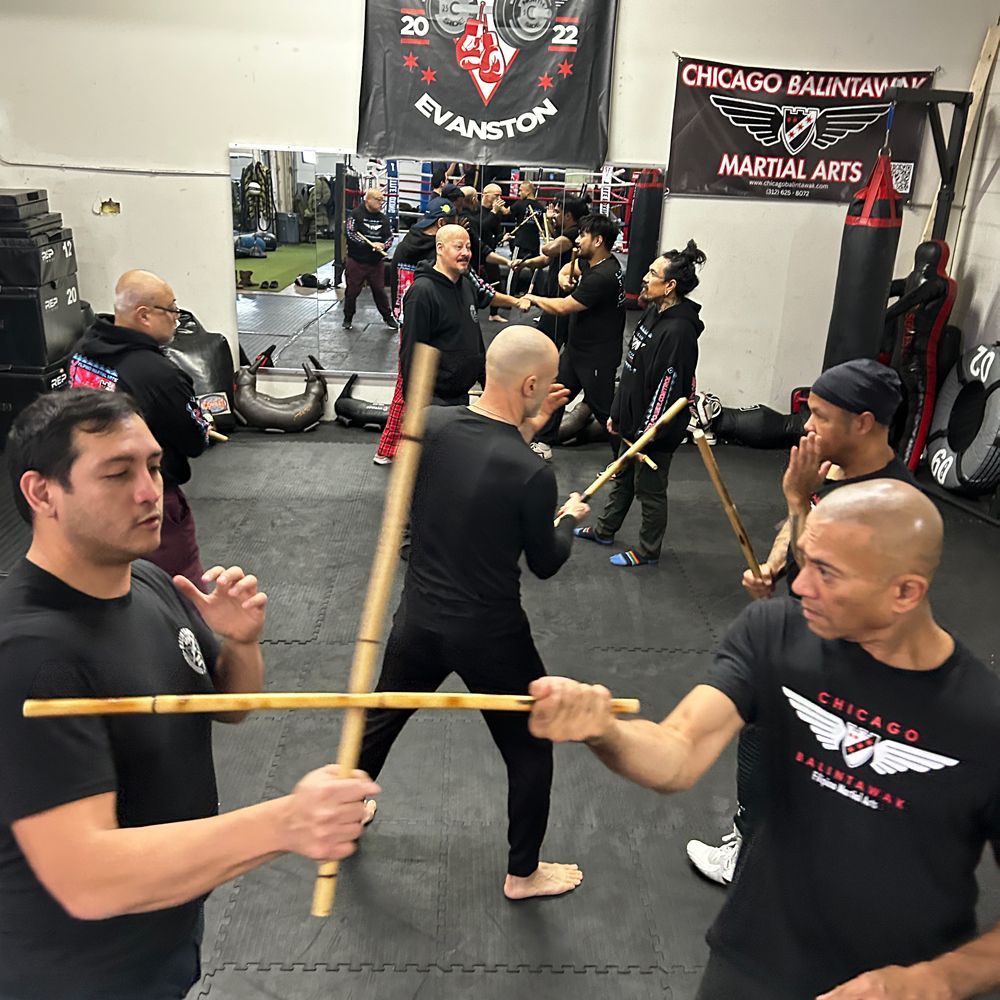
Adult martial arts class near me

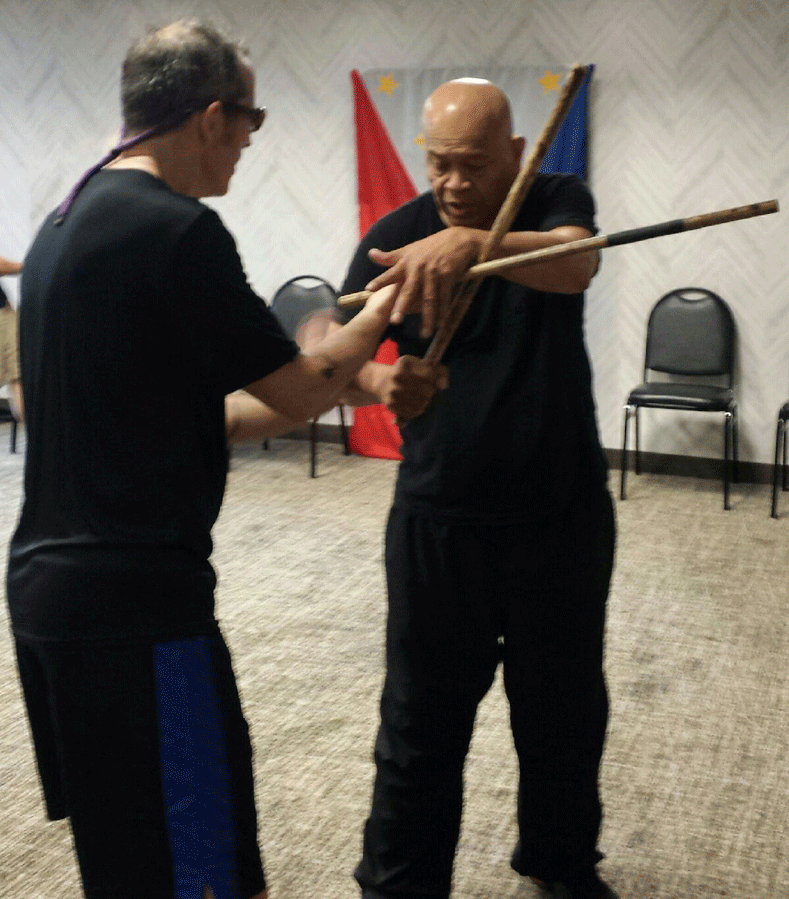
Balintawak Eskrima is a Filipino Martial Art (also known as FMA) focused on timing, awareness, control, and adaptability. It’s especially effective for adults because:

  • You don’t need peak athleticism to start
  • Skill develops through learning the foundation movements then building up reactions and decision-making, not brute force
  • Training scales safely as you improve
  • You learn weapons and empty-hand self-defense together


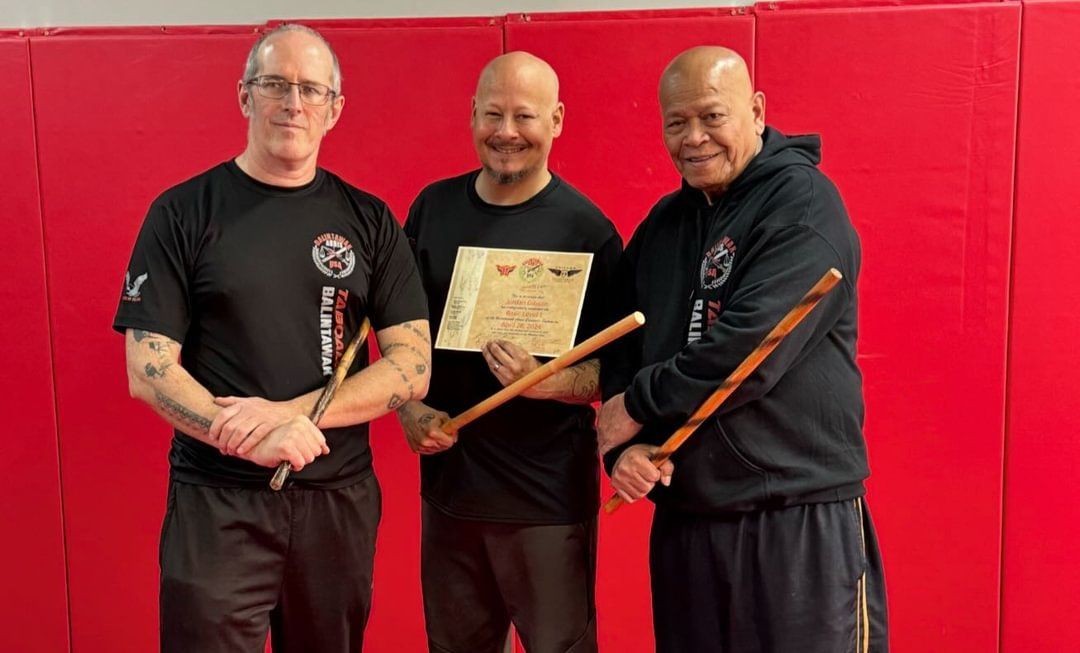
Our foundational curriculum draws from GM Bobby Taboada’s Balintawak Eskrima Cuentada System
and
GM Jorge Penafiel’s Putakti System, taught in a progressive, semester-based format designed for adults with real lives.


The Commute Matters More Than You Think

This part is underrated.

In Chicago, it can take 40 minutes to go three miles. In Evanston and Skokie, the same distance can be much shorter—especially along Dempster Street or N. McCormick Blvd.

While some people do travel over an hour each way to train, most can’t sustain that long-term.


Consistency beats intensity.


Choosing a martial arts school near where you live, work, or spend lots of time dramatically increases your chances of sticking with it—and actually getting good.


New to Martial Arts? The Beginner Experience Matters

Not all martial arts schools are beginner-friendly.

Some throw you straight into advanced classes. That can be overwhelming—and risky—especially if you have:

  • A job you can’t miss
  • Family responsibilities
  • Old injuries
  • A body that doesn’t bounce like it did at 22


We recommend looking for a school that has entry-level classes built on the assumption that you have zero experience, but are engaging for experienced martial artists, as well.


A good beginner class should teach:

  • Control
  • Safety
  • Timing
  • Structure

Yes, even the “basic” stuff is practical. A lot of times, the MOST practical.
And yes—your instructor should make the basics
fun, not boring.


Why Fun Is Not a Gimmick

Drills are turned into games on purpose.

Because when people are relaxed:

  • They learn faster
  • They react more naturally
  • They build trust with training partners

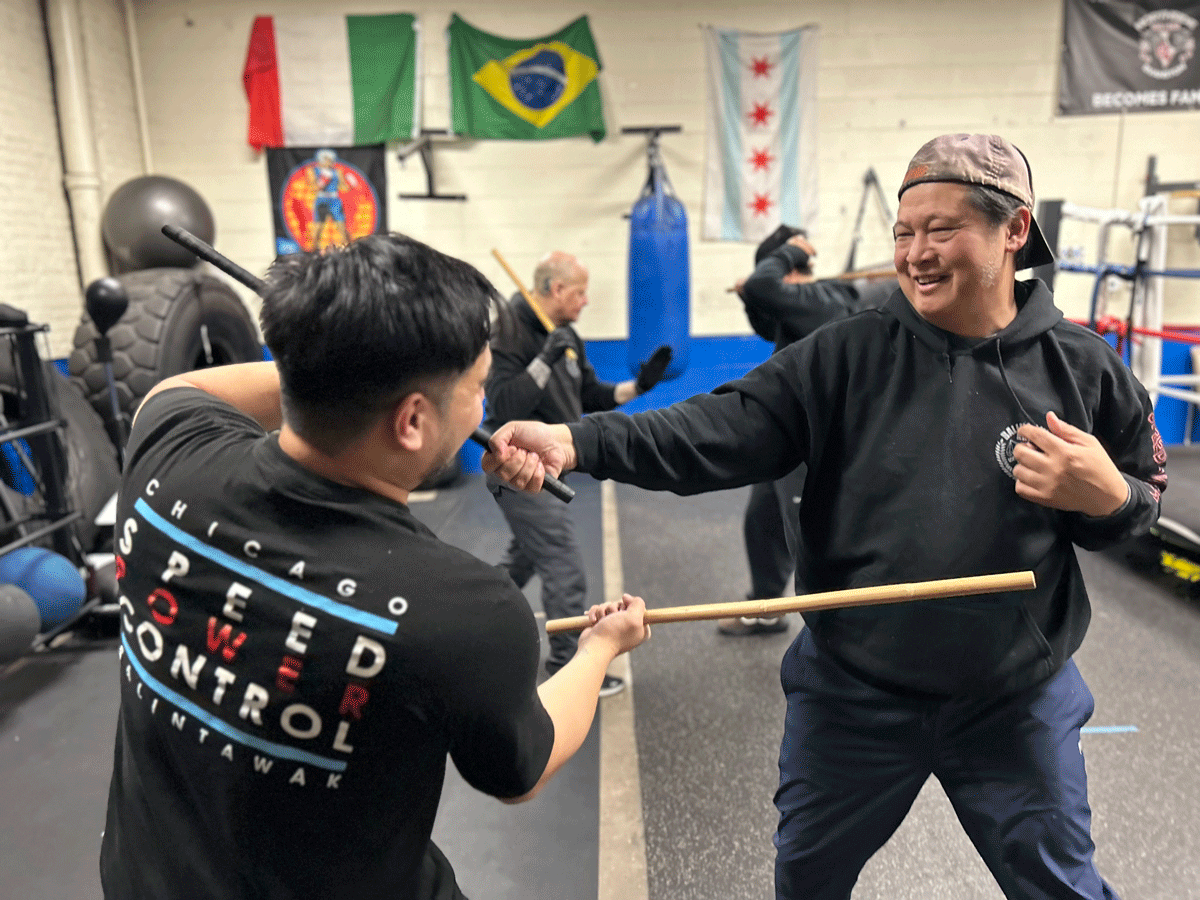
And trust matters when someone is swinging a stick at you—or manipulating your joints.

You should leave class tired, sharper, and smiling—not limping.


Community Is the Secret Ingredient

People stay for skills.
They commit because of
community.

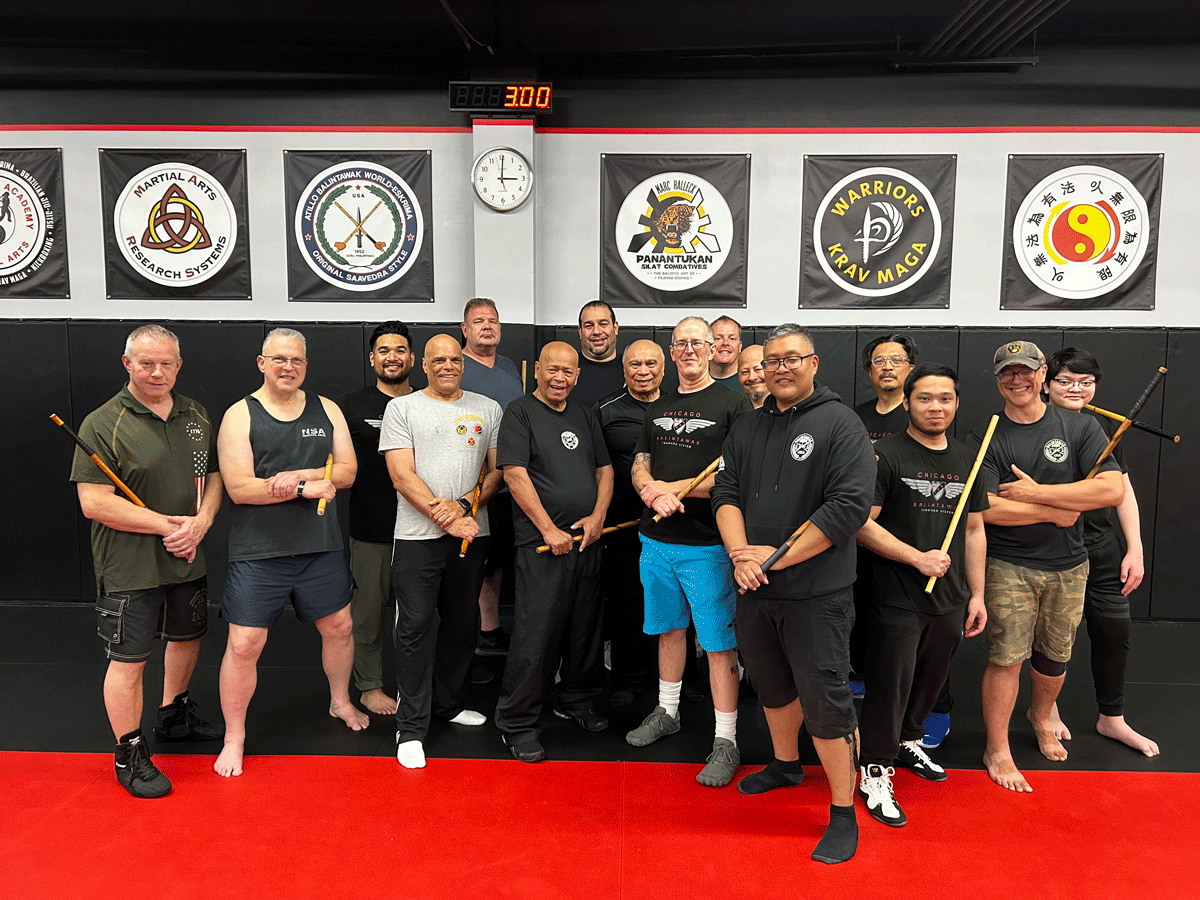
Look for a program where the students train together, share rides, practice outside of class, and break bread after tests and seminars. Where they laugh, train hard, and respect each other.

We love training alongside a diversity of people:

  • Engineers
  • Doctors
  • Artists
  • Security professionals
  • Business owners
  • People in their 30s, 40s, 50s, and 60s

Community is not a vibe you fake. It’s something that is built.
We think that it is really important to find people you like being around. If you don't like them then you aren't going to be as motivated to go to train or get the most out of the experience.


The Hardest Step Is the First One

Making the call.
Booking the class.
Showing up.

That part? Totally normal to feel weird about.

You’re okay.
You’ve got this.

If you’re searching for martial arts in Evanston, martial arts Skokie, or martial arts near me, your next step isn’t more research—it’s trying a class. In fact, go try several!


Frequently Asked Questions

Do I need martial arts experience to start Balintawak as an adult?

No martial arts experience is required. Our Balintawak classes in Evanston are designed specifically for adult beginners. Training starts with fundamentals like control, timing, and safety, and progresses at a pace that works for people with jobs, families, and real-world responsibilities.

Learn more

Is Balintawak martial arts safe for older adults or people with past injuries?

Yes. Balintawak training emphasizes control, awareness, and respect for your training partner’s body. Many students are in their 40s, 50s, and 60s, including professionals with prior injuries. Drills are scalable, and safety is prioritized.

Learn more

What makes Balintawak Eskrima different from other martial arts?

Balintawak Eskrima focuses on real-time decision making, reflex development, and practical self-defense rather than memorized forms or competition. Training includes weapons-based and empty-hand skills taught progressively.

Learn more

Is Balintawak a competitive martial art?

No. Training is not competition-focused. Classes emphasize real-world self-defense, personal growth, and skill development.

Learn more

Where are Balintawak classes located?

Classes are held in Evanston, Illinois, near Skokie and Niles. Additional North Side Chicago locations are being planned.

Learn more

How do I get started?

You can get started by reserving a class online. Intro offers are available, and no prior experience or special equipment is required.
Get started

By Robert Grossman January 15, 2026
How Balintawak Builds Community From the Ground Up
By Robert Grossman August 22, 2025
1. Trust: The Core of Martial Arts and Real Community
Grandmaster Bobby Taboada training Guro Robert Grossman in Balintawak Eskrima counter-to-counter dri
By Robert Grossman July 16, 2025
Discover why training with Grandmaster Bobby Taboada in Balintawak Eskrima is a transformative experience for Filipino Martial Arts students in Chicago.
By Robert Grossman June 6, 2025
Let’s be real for a second. If you live in Chicago, Evanston, Skokie, or Niles, you’ve probably passed at least five different martial arts gyms without even noticing. Tae Kwon Do, BJJ, Krav Maga, Muay Thai, Karate, Kung Fu, Silat… It’s a buffet. The hard part isn’t finding a place to train—it’s figuring out what kind of training will actually fit your life. I’ve been there. I live by Albany Park, and I’ve tried everything from Hapkido to Aikido. I work a job that doesn’t let me just clock out and forget it all. So when I started training in Filipino Martial Arts—specifically Balintawak Eskrima—it was like something finally clicked. I found a system that kept my body moving, made me feel sharp, and reminded me of why I started in the first place: I wanted to learn something practical. So here’s what I’ve learned—whether you’re in your 30s figuring out your next step, or in your 50s still curious (and still kicking)—here’s what really matters when choosing where and what to train:
Students enjoying practicing drills in Balintawak martial arts class
By Robert Grossman May 16, 2025
Let’s be honest: work stress doesn’t stay neatly behind at 5:00 PM on Friday. It rides home with you, creeps into your weekend, and hijacks your headspace. Whether you’re grinding at a desk in downtown Chicago, troubleshooting systems in Skokie, or simply trying to be present with your family and your own goals — the pressure adds up. And most people don’t have a healthy way to hit the reset button. So here’s a wild but solid solution: Hit something with a stick. I’m talking about Filipino Martial Arts (FMA) — specifically Balintawak Eskrima, a stick-based system that helps you shake off the mental cobwebs, get grounded in your body, and reset your nervous system after a long, overstimulating week. You don’t have to be a fighter. You just have to be ready to swing, sweat, and show up. Let me break down how it works.
By Robert Grossman April 23, 2025
I’ve spent years behind desks, in front of screens, solving problems that lived in spreadsheets, security protocols, or messy data sets. And while my degrees in design methods and imaging taught me how to think critically, nothing rewired the way I actually respond to challenges quite like Filipino Martial Arts — specifically, Balintawak Eskrima. It’s more than learning to defend yourself. It’s training your body and mind to process chaos, spot patterns, and make better decisions — fast.
By Robert Grossman March 17, 2025
It's Not About Your Job Title, It's About How You Live Your Life So many of you Chicago area have desk jobs. Analysts, designers, marketers, engineers, and more. That doesn’t mean you aren’t warriors in your own way. Being a warrior isn’t just for people who carry a firearm for a living. Being a warrior is how you live your life. What it means to be a warrior That means taking care of yourself and your loved ones. Taking care of your community. Digging in and standing tall when you are scared. It’s doing the hard thing sometimes. It’s speaking the truth rather than holding back. It’s going hard. It’s in your attitude of getting back in the game when you make a mistake. It doesn’t mean your superior. It’s coming at whatever it is with your full self. It means making time for regular training. Making Time to Train A warrior trains. Even training 15 minutes a day adds up. The more times you practice the better you get. Physical movement and sweating gets the blood flowing so you can let go of stress, especially if you’ve been sitting all day. Training helps your physical fitness and improves mental focus. A good martial arts practice translates beautifully to office life. It transforms your attitude. Have you ever noticed that you’re able to work through things on the mat that have been in your way at work? I remember practicing one day years ago and my instructor told me I was sticking my butt out and all I could think was “Man! I’ve been doing that all week at work, too!” People Skills Nowadays a warrior has to know how to work with people. In martial arts training that gets practiced by building trust and respect with your training partners. I’ll tell you a secret - finding ways to make them shine will make you shine. Interpersonal skills come from communicating and learning from the encounters. Being able to communicate so you don’t hurt each other help you build more intensity with your movements. Nowadays being a warrior is also leadership. That doesn’t mean being the one in charge but leading by example. That is part of why we have you lead the 12 Basics in class. Remember, being a warrior is an attitude. It’s how you live your life. It’s not that you have to even consider yourself one. It’s how you approach your day and and deal with what you are faced with. It’s how you are in the world. It’s something that is cultivated and practiced. It can be done from anywhere. Whether from in the dojo, the garden, or at your desk, you are a warrior when you need to be.
The back of a hand holding a pen as a weapon, against a blue background.
By Robert Grossman February 7, 2025
You work at night a lot. You know someone who has been assaulted. You took some self defense classes as a teenager but its been years so now you are finding ways to start practicing again. Here are the top five self-defense moves you should consider mixing into your routine. These come from my 30+ years training martial arts, my own experiences and having spoken to numerous women on the subject and taken into account what their experience has been like.